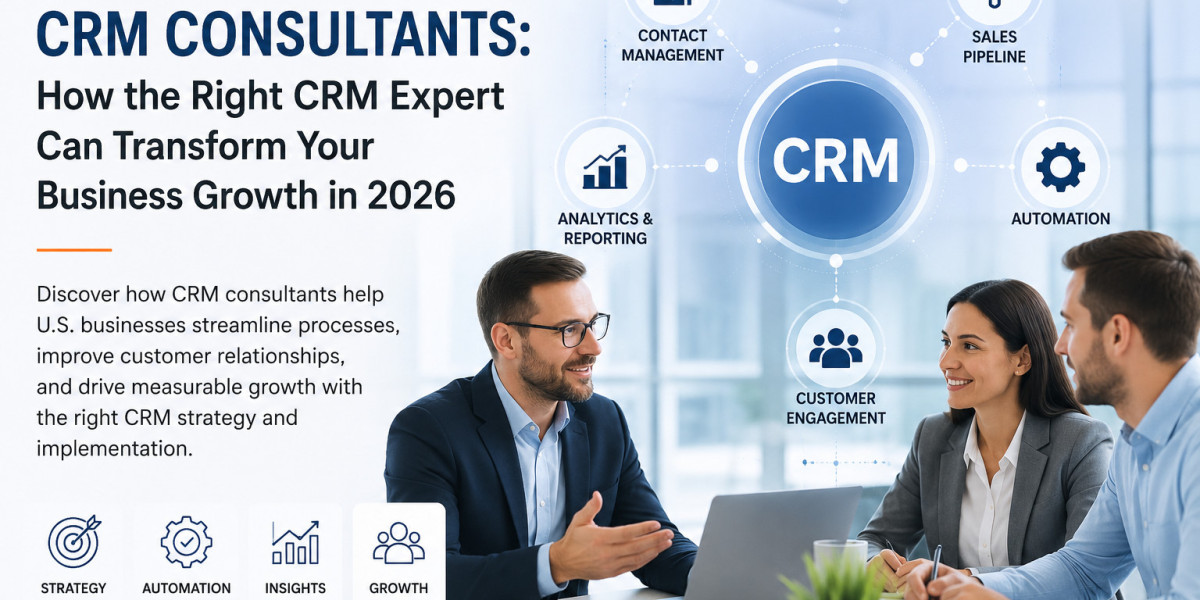

Modern businesses don't struggle because they lack data. They struggle because customer information is scattered across spreadsheets, emails, marketing tools, support platforms, and disconnected systems.
A Customer Relationship Management (CRM) platform promises to solve these problems. Yet many CRM projects fail to deliver expected results—not because the software is bad, but because the implementation strategy is flawed.
This is where CRM consultants create measurable value.
Whether you're implementing Salesforce, Zoho CRM, HubSpot, Microsoft Dynamics, or a custom CRM ecosystem, experienced CRM consultants help businesses align technology with real business processes, ensuring adoption, automation, and long-term ROI.
What Do CRM Consultants Actually Do?
Many business leaders assume CRM consultants simply install software and configure fields.
In reality, a professional CRM consultant acts as a strategic advisor, business analyst, automation specialist, and implementation expert.
A CRM consultant helps organizations:
Analyze existing sales and customer processes
Identify operational bottlenecks
Design CRM architecture
Configure workflows and automation
Integrate third-party applications
Migrate historical customer data
Train users and teams
Improve reporting and forecasting
Drive long-term CRM adoption
The goal isn't merely deploying software. The goal is improving customer relationships, sales efficiency, and operational performance.
Signs Your Business Needs CRM Consultants
Many organizations invest in CRM software but continue operating with inefficient processes.
You may benefit from CRM consulting services if:
Your Sales Team Uses Multiple Spreadsheets
When customer information exists in multiple files and systems, teams waste valuable time searching for information instead of engaging prospects.
Lead Follow-Ups Are Inconsistent
Without automated lead assignment and follow-up workflows, opportunities frequently fall through the cracks.
Reporting Is Inaccurate
Executives need reliable forecasts and real-time visibility into sales pipelines. Manual reporting often creates delays and inaccuracies.
Customer Data Is Disconnected
If marketing, sales, and support teams operate on separate systems, customer experiences become fragmented.
Your Existing CRM Has Low Adoption
One of the most common problems in CRM projects is user resistance. CRM consultants identify adoption barriers and improve usability.
The Real Cost of Poor CRM Implementation
Businesses often focus on software licensing costs while overlooking the larger financial risks associated with implementation failure.
Poor CRM deployments can result in:
Lost sales opportunities
Duplicate customer records
Inaccurate forecasting
Reduced productivity
Customer dissatisfaction
Increased employee frustration
In many cases, organizations spend thousands on CRM subscriptions but fail to realize meaningful business improvements because processes were never properly designed.
Experienced CRM consultants help prevent these costly mistakes.
How CRM Consultants Improve Revenue Performance
The best CRM consultants focus on business outcomes rather than technical features.
Faster Lead Response Times
Automated lead routing ensures prospects are assigned to the right representatives immediately.
Better Pipeline Visibility
Leadership teams gain real-time insights into deal progression, conversion rates, and sales performance.
Improved Customer Retention
CRM automation enables personalized communication and proactive customer engagement.
Increased Team Productivity
By eliminating repetitive manual tasks, employees can focus on higher-value activities.
More Accurate Forecasting
Advanced reporting and dashboard configuration provide data-driven decision-making capabilities.
CRM Consultant vs CRM Implementation Partner
These terms are often used interchangeably, but they serve slightly different purposes.
CRM Consultant
Focuses on strategy, process optimization, system design, and business alignment.
CRM Implementation Partner
Focuses primarily on deployment, configuration, integrations, and technical execution.
The most successful projects combine both strategic consulting and technical implementation expertise.
What to Look for When Hiring CRM Consultants
Not all CRM consultants deliver the same value.
Before selecting a CRM consulting partner, evaluate the following:
Industry Experience
Look for consultants who understand your business model, customer journey, and industry-specific challenges.
Platform Expertise
Ensure they have experience with platforms such as:
Salesforce
Zoho CRM
HubSpot
Microsoft Dynamics 365
Integration Capabilities
Modern businesses require CRM systems to connect with:
ERP systems
Accounting software
Marketing automation platforms
Customer support tools
E-commerce platforms
Change Management Skills
Technology alone doesn't drive adoption. Effective consultants help teams embrace new processes and workflows.
Long-Term Support
The CRM journey doesn't end after deployment. Ongoing optimization often determines long-term success.
Why U.S. Businesses Are Increasingly Investing in CRM Consulting
Across the United States, companies are facing growing pressure to improve customer experiences while operating more efficiently.
As AI-powered sales tools, automation platforms, and customer expectations continue evolving, businesses require CRM systems that can adapt and scale.
Professional CRM consultants help organizations:
Modernize customer operations
Reduce operational inefficiencies
Improve customer acquisition
Increase retention rates
Accelerate digital transformation initiatives
Rather than treating CRM as software, leading organizations view it as a strategic growth platform.
How Clotus Helps Businesses Maximize CRM ROI
At Clotus, we help organizations transform disconnected systems into unified customer ecosystems.
Our CRM consulting services include:
CRM strategy and roadmap development
Salesforce consulting and implementation
Zoho CRM consulting and customization
Business process automation
System integration services
Data migration and optimization
User training and adoption programs
Ongoing CRM support and managed services
We focus on delivering measurable business outcomes—not just software deployments.
Whether you're launching a new CRM platform or optimizing an existing environment, our experts help you build scalable systems that support long-term growth.
Final Thoughts
CRM software alone doesn't improve customer relationships. The real value comes from designing processes, automating workflows, and aligning technology with business objectives.
Experienced CRM consultants help organizations avoid costly implementation mistakes, increase user adoption, and generate measurable returns from their CRM investments.
For businesses looking to improve operational efficiency, customer engagement, and revenue performance, partnering with the right CRM consulting team can be one of the most impactful technology decisions they make.