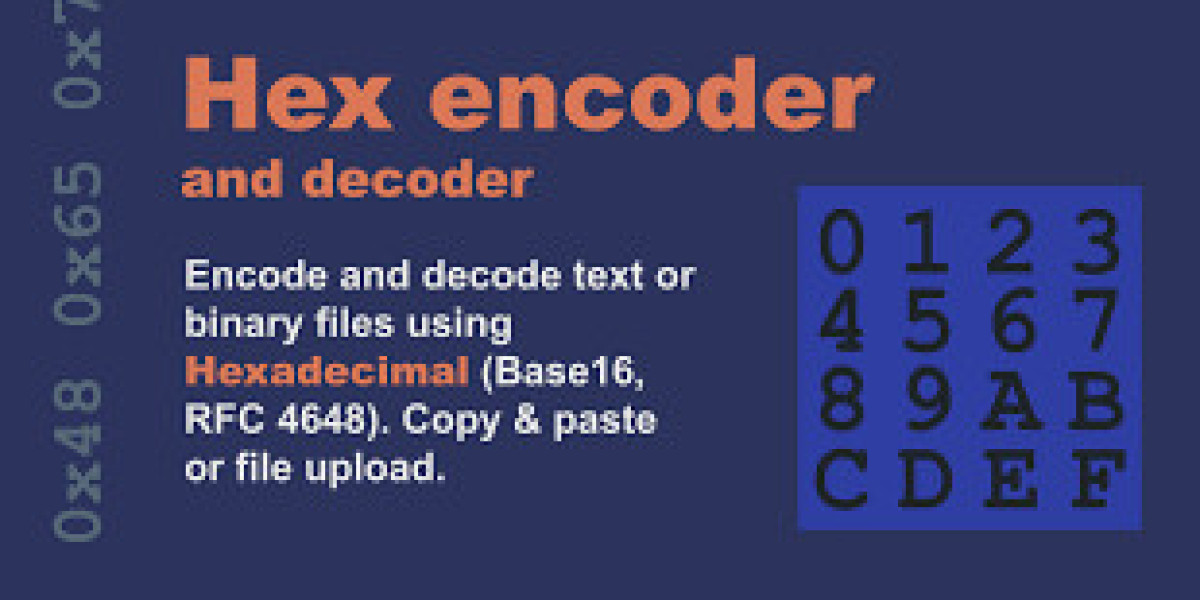

Digital systems constantly store, transmit, and process information in different formats. While computers work internally with binary values, humans often need a more readable way to view and analyze data. This is where a hex encoder becomes useful. By converting information into hexadecimal format, users can work with complex digital data more efficiently while maintaining accuracy.
Hexadecimal encoding plays a significant role in programming, cybersecurity, networking, software development, and digital communications. Understanding how hexadecimal representation works can help users gain deeper insight into modern computing systems.
What Is Hexadecimal?
Hexadecimal is a base-16 numbering system used throughout computing.
Unlike the decimal system, which uses ten digits, hexadecimal uses sixteen symbols: 0 through 9 and A through F. The letters represent values from ten to fifteen.
This expanded numbering system allows large binary values to be displayed in a shorter and more manageable format.
Why Do Computers Use Hexadecimal Representation?
Binary numbers are accurate but can become very long and difficult to read.
Hexadecimal simplifies binary data by grouping bits into smaller sections. Each hexadecimal character represents four binary digits, making large values easier for humans to interpret.
This balance between efficiency and readability makes hexadecimal widely used across technical environments.
What Does a Hex Encoder Do?
A hex encoder converts data into hexadecimal format.
The input may consist of text, numerical values, binary information, or other digital content. The encoder processes the data and generates a hexadecimal representation that preserves the original information while making it easier to analyze and transmit.
This process is commonly used in many computing applications.
Why Is Hexadecimal Easier to Read Than Binary?
A long binary sequence may contain dozens or even hundreds of digits.
By converting the same information into hexadecimal notation, the number of displayed characters is significantly reduced. This makes data inspection, debugging, and analysis much more practical.
Shorter representations improve efficiency when working with technical information.
How Is Hexadecimal Used in Programming?
Developers frequently encounter hexadecimal values while writing and debugging software.
Memory addresses, machine instructions, error codes, and data structures are often displayed in hexadecimal format. Understanding encoded values helps programmers analyze system behavior more effectively.
Hexadecimal remains a fundamental part of software development workflows.
Why Do Cybersecurity Professionals Use Hex Encoding?
Cybersecurity investigations often involve analyzing digital evidence and encoded information.
Network traffic, malware samples, memory dumps, and forensic artifacts frequently contain hexadecimal data. Understanding encoded values allows analysts to interpret information more accurately and identify unusual patterns.
Hexadecimal knowledge supports effective security analysis.
How Does Hex Encoding Support Data Transmission?
Many communication systems rely on encoded information to ensure accurate data transfer.
Hexadecimal provides a compact and standardized format that simplifies the representation of digital information during transmission. This helps reduce confusion and improves consistency across systems.
Reliable encoding supports dependable communication.
How Can a Hexadecimal Data Converter Improve Efficiency?
A hexadecimal data converter automates the encoding process and eliminates the need for manual calculations.
Users can quickly transform information into hexadecimal format without spending time performing conversions themselves. This improves accuracy while reducing repetitive tasks.
Automation helps streamline technical workflows.
How Can Automation Benefit Technical Professionals?
Modern technology environments often depend on automated tools to improve productivity.
Whether managing data, monitoring systems, or performing conversions, automation reduces manual effort and increases consistency. Solutions such as prourlmonitor demonstrate how specialized tools can simplify technical operations and improve workflow efficiency.
Efficient tools help professionals focus on more strategic work.
Why Is Hexadecimal Common in Networking?
Networking technologies frequently use hexadecimal notation to represent technical information.
MAC addresses, packet data, protocol identifiers, and hardware information often appear in hexadecimal format because it provides a compact representation of binary values.
Network engineers regularly work with hexadecimal during configuration and troubleshooting.
How Has Hex Encoding Evolved Over Time?
Early computing environments relied heavily on manual conversion methods and reference tables.
Modern encoding tools now provide instant conversions, support multiple formats, and integrate directly into development and security platforms. These advancements have made hexadecimal processing faster and more accessible.
Technology continues to simplify technical tasks.
Why Is Data Representation Important in Computing?
Computers process enormous volumes of information every second.
The way data is represented affects how efficiently users can analyze, interpret, and manage that information. Hexadecimal serves as an effective bridge between raw binary data and human-readable formats.
This makes it one of the most widely used number systems in computing.
Why Should You Use a Hex Encoder?
A hex encoder helps users convert digital information into a compact, readable, and standardized format that simplifies analysis and processing.
Whether working in programming, networking, cybersecurity, software development, or technical education, hexadecimal encoding provides an efficient way to represent complex data. As digital systems continue evolving, understanding hexadecimal concepts will remain a valuable skill for technical professionals and learners alike.