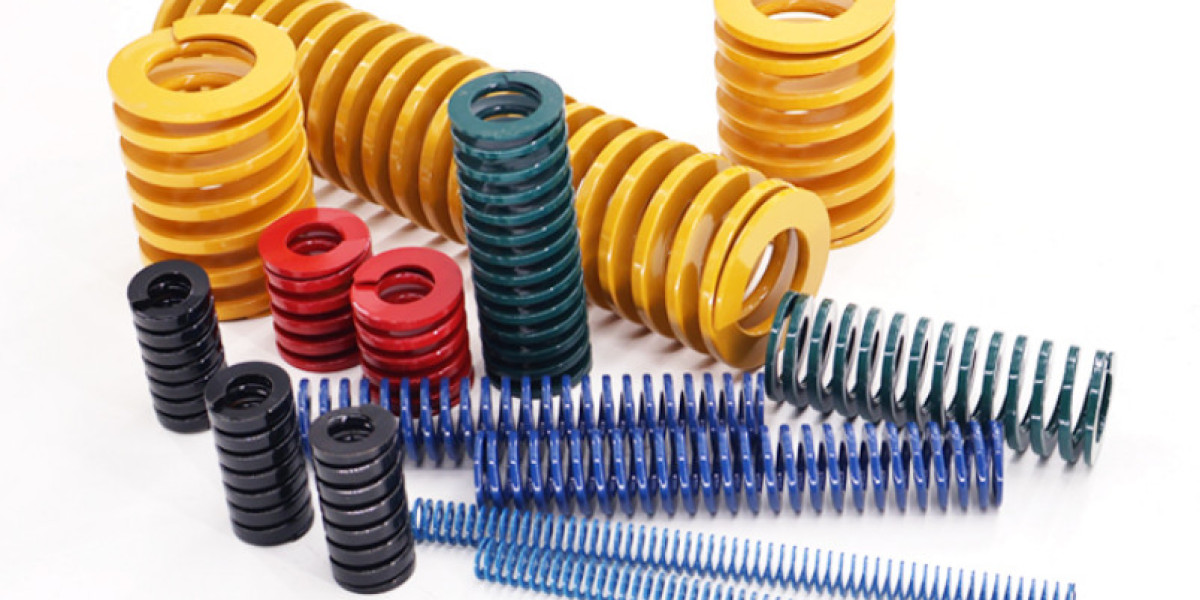

Compression springs are one of the most widely used elastic components in mechanical engineering systems. Their primary function is to resist compressive forces and store mechanical energy when subjected to axial loads. When the load is removed, the spring returns to its original shape, releasing stored energy efficiently.
A typical compression spring is made from round wire formed into a helical coil. The design allows it to handle repeated loading cycles while maintaining predictable performance. Key parameters influencing performance include wire diameter, outer diameter, free length, and number of active coils.
For example, spring rate (k) is a critical engineering value defined as force per unit deflection, commonly measured in N/mm or lbs/in. A higher spring rate indicates a stiffer spring requiring more force to compress.
In industrial applications, compression springs are used in automotive suspension systems, valves, electrical switches, and mechanical assemblies where controlled force is required. They are also commonly used in precision instruments where consistent force feedback is essential.
Material selection is equally important. High-carbon steel, stainless steel, and alloy steels are commonly used depending on corrosion resistance, fatigue life, and load requirements. For high-temperature environments, specialized alloys may be selected to maintain elasticity.
A properly designed compression spring must avoid buckling under load. Engineers often use guide rods or tubes to maintain alignment and ensure stable axial compression. Without proper guidance, lateral forces can cause instability and reduce service life.
In conclusion, compression springs are essential components that convert mechanical energy into controlled force and motion. Their predictable behavior and versatility make them indispensable in modern engineering systems.