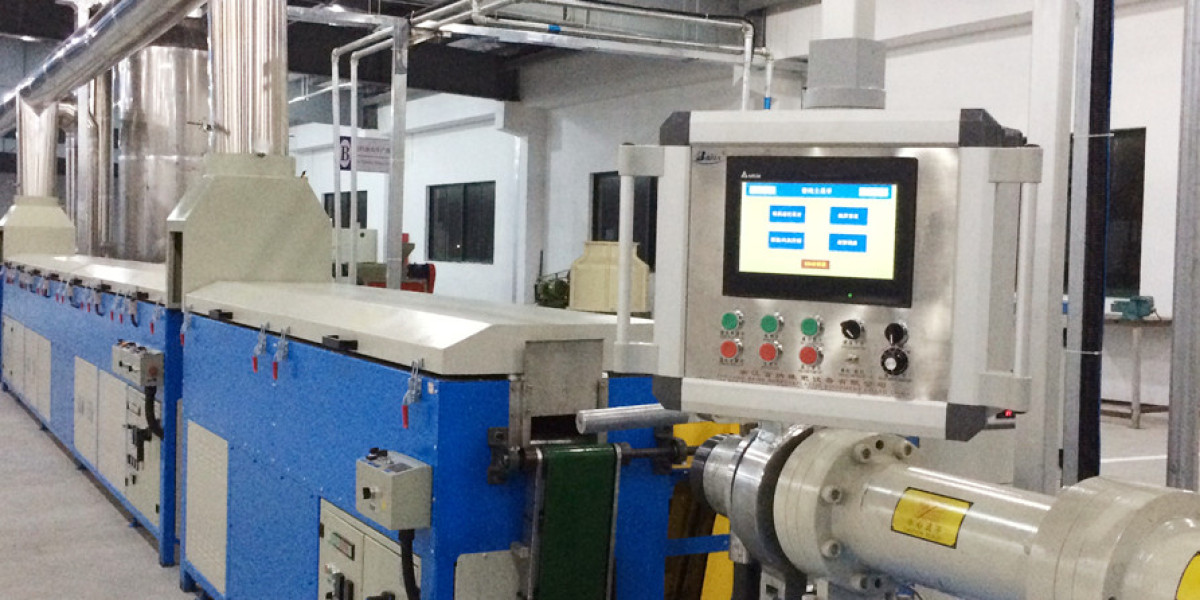

Rubber products used in sealing, insulation, and industrial applications are widely produced through continuous forming technology. One of the most important equipment in this field is the rubber extrusion machine, which transforms raw rubber compounds into uniform profiles with consistent cross-sections.
The process begins with material feeding. Rubber strips or pre-mixed compounds are loaded into a hopper, where they are drawn into a heated barrel by a rotating screw. Inside the barrel, the rubber is gradually softened through a combination of friction, external heating, and compression. Typical processing temperatures range from 60°C to 120°C depending on compound type such as EPDM, NBR, or silicone.
As pressure builds inside the barrel, the material is forced toward a specially designed die. The die determines the final shape of the product, such as U-channels, sealing strips, or tubing. Once the material passes through the die, it forms a continuous extrudate.
In many production lines, the rubber extrusion machine is followed by a cooling system, often using water baths or air cooling tunnels. This step stabilizes the shape and prevents deformation. After cooling, the rubber is either cut into fixed lengths or wound into rolls.
Technical parameters play a key role in quality control. Screw speed commonly ranges from 20 to 80 rpm, while barrel pressure may reach 10–20 MPa depending on output requirements. Temperature stability is especially important, as overheating may cause premature vulcanization or material degradation.
Overall, this process provides high efficiency and continuous production capability, making it essential for modern rubber manufacturing industries.