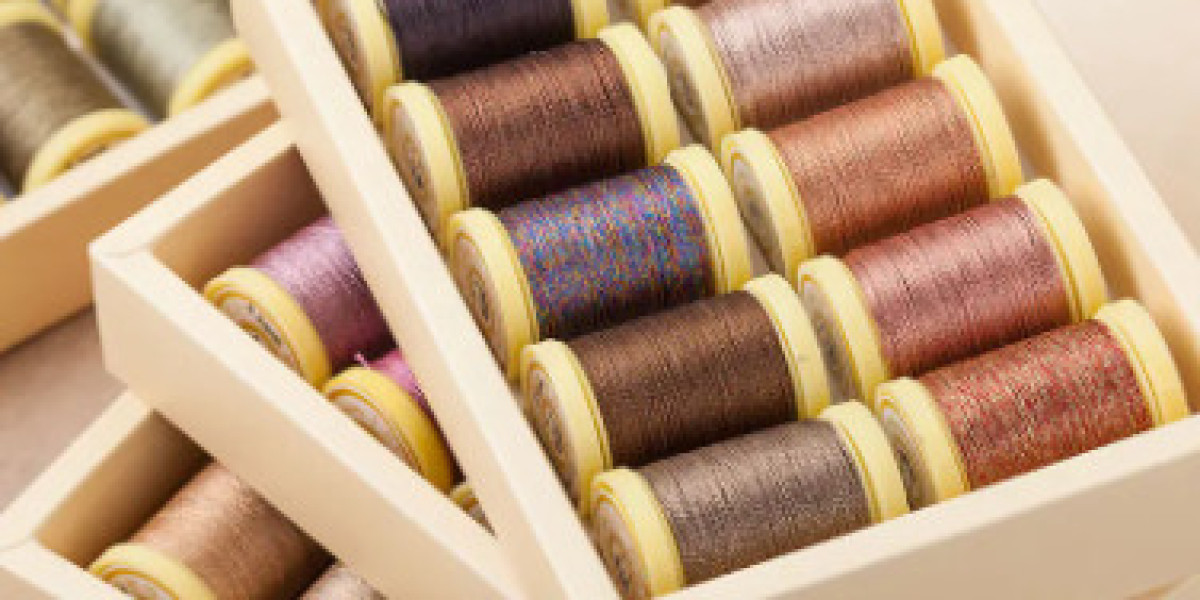

Metallic details continue to appear in modern knitwear because designers and manufacturers are searching for materials that provide visual depth without adding excessive fabric weight. Decorative knitted fabrics used in fashion garments, scarves, winter accessories, and stage apparel increasingly combine synthetic fibers with reflective yarn structures to achieve this effect. One material frequently discussed in textile forums and knitting communities is Metallic Yarn for Knitting because it can create subtle shimmer or highly reflective surfaces depending on the yarn construction.
Metallic yarn is commonly produced by combining polyester film, aluminum-coated layers, nylon support fibers, or blended synthetic filaments. Many yarn structures use a wrapped design that improves flexibility during knitting operations. A common specification range includes 12μm to 25μm metallic film thickness with denier options from 20D to 150D depending on the intended application. Finer yarn counts are typically used in lightweight knitwear, while thicker constructions may be used for decorative trims and heavy winter textiles.
Knitting manufacturers often combine metallic yarn with acrylic, cotton, viscose, or wool blends to balance comfort and appearance. Pure metallic yarn can sometimes feel stiff during high-speed knitting, so blended constructions are frequently selected for commercial production. Textile processing discussions also note that lower tension settings may help reduce yarn breakage during circular knitting operations.
Another reason metallic yarn has gained attention is its compatibility with computerized flat knitting equipment. Digital knitting systems can integrate reflective yarn zones directly into garment structures without requiring additional decoration after production. This approach may reduce certain finishing steps while improving pattern precision. Some knitting factories now produce gradient shimmer fabrics, geometric reflective panels, and seasonal fashion textiles through automated yarn feeding systems.
The visual effect of metallic yarn also changes according to stitch structure. Rib knitting tends to create stronger reflection because of the raised surface geometry, while jersey knitting provides a softer shine. Jacquard knitting allows metallic areas to appear selectively across the fabric surface, which is widely used in fashion sweaters and decorative accessories.
Care and maintenance remain important for metallic textile products. Industry articles often recommend low-temperature washing and reduced ironing heat because excessive thermal exposure may affect metallic film stability. Some knitted fabrics containing metallic yarn are also hand washed to preserve surface brightness over longer usage cycles.
Current knitting trends indicate that metallic yarn is no longer limited to festive garments. It is increasingly used in lightweight sports fashion, interior textiles, handbags, hats, and decorative knitted accessories. As textile machinery continues improving yarn control and tension management, metallic yarn applications in knitting are expected to expand further into functional and creative fabric development.