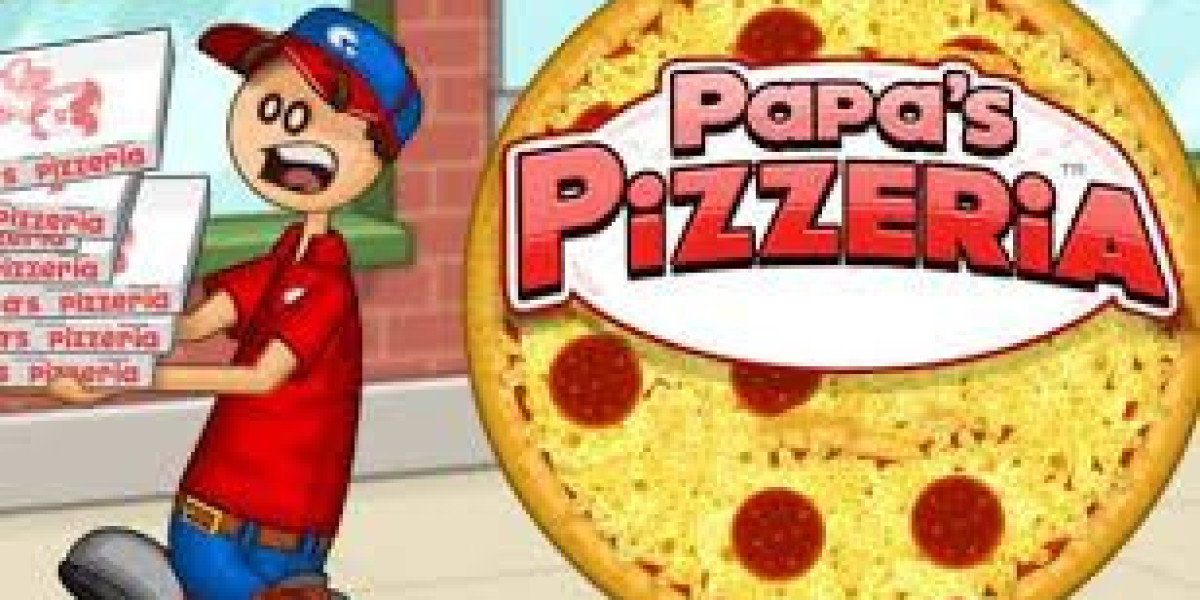

The first few shifts in Papa’s Pizzeria usually feel manageable.
Then the game decides you’re getting comfortable.
Now there are four active orders. One pizza needs to come out of the oven immediately. Another customer just walked in asking for an absurd amount of olives. You accidentally placed pepperoni on the wrong half of a pizza and can already feel your customer rating collapsing before the order is even finished.
Somehow, this becomes fun instead of exhausting.
That’s always been the strange magic behind cooking and time-management games. They create miniature disasters that players voluntarily return to over and over again.
Not because the tasks are exciting on their own, but because the process of becoming efficient feels incredibly satisfying.
Papa’s Pizzeria Understands Momentum Better Than Most Games
A lot of games rely on spectacle to keep attention.
Papa’s Pizzeria mostly relies on momentum.
Once the workday starts, the game keeps pushing players gently forward. Customers arrive steadily enough that there’s rarely a perfect stopping point. Every completed pizza immediately leads into another task.
That pacing matters more than people realize.
The gameplay loop itself is repetitive:
take orders, add toppings, bake pizzas, slice carefully, serve customers.
But repetition isn’t automatically boring when timing and pressure are involved. The game constantly asks players to divide attention between several small responsibilities at once.
The oven timer creates urgency.
Customer patience creates pressure.
Accuracy creates tension.
Together, those systems produce a surprisingly focused mental state where players stop noticing time passing entirely.
That’s why “one more day” in Papa’s Pizzeria often turns into another hour without much effort.
The Game Quietly Teaches Players to Multitask
One reason Papa’s Pizzeria feels rewarding is because improvement becomes obvious very quickly.
At the beginning, handling multiple tickets feels chaotic. Players move slowly because every action requires conscious thought. You double-check topping placement. You stare at oven timers nervously. You panic whenever two customers arrive too close together.
Eventually, though, something changes.
Your brain starts organizing tasks automatically.
You remember orders before checking tickets.
You rotate between stations instinctively.
You begin planning ahead instead of reacting constantly.
The gameplay doesn’t evolve dramatically — the player does.
That progression creates a subtle sense of competence that many larger games struggle to achieve. Success isn’t tied to stronger weapons or better stats. It comes from becoming more efficient personally.
And efficiency feels good.
Especially in games where feedback arrives immediately. A perfectly baked pizza earns higher scores instantly. Faster service improves tips. Customers react positively right in front of you.
The systems reinforce improvement every few seconds.
That constant feedback loop is part of why management games become strangely habit-forming. Similar patterns show up in [other browser-era simulation games] where repetitive tasks gradually transform into satisfying routines.
Players aren’t necessarily chasing excitement. They’re chasing smoothness.
There’s a Thin Line Between Stressful and Relaxing
Cooking games sit in a weird emotional category.
People describe them as relaxing while also describing moments of complete panic.
Both are true.
The stress inside Papa’s Pizzeria works because it remains contained. Players feel pressure, but the consequences never extend beyond the game itself. Burned pizza? Minor setback. Angry customer? Recoverable tomorrow.
That safety changes how stress feels psychologically.
Instead of creating anxiety, the game creates focus.
You can actually feel this during busy rushes. Outside distractions disappear because your attention narrows entirely onto managing orders efficiently. The brain locks into short-term priorities:
don’t forget the oven,
finish the toppings,
cut evenly,
serve quickly.
For a while, everything becomes simple.
Ironically, that simplicity can feel calming even when the gameplay itself is hectic.
A lot of cozy management games still use this exact formula today. They create manageable pressure inside predictable systems. The player stays engaged without feeling genuinely threatened.
Papa’s Pizzeria understood this balance years before “cozy gaming” became a popular label online.
The Customers Become Weirdly Memorable
It’s funny how attached players become to recurring customers in these games.
Objectively, the customers in Papa’s Pizzeria barely have personalities. Most stand silently while waiting for food. Still, players quickly develop strong opinions about them.
Some customers become favorites because their orders are easy.
Others become immediate enemies because they always arrive during busy periods asking for complicated pizzas.
Everybody remembers at least one customer they secretly dreaded seeing.
That emotional attachment happens because the game turns routine interactions into patterns players recognize over time. Regular customers create familiarity. Familiarity creates investment.
Even tiny visual reactions matter. Happy customers feel rewarding. Disappointed ones feel strangely personal.
The game quietly encourages players to care about performance without ever making failure feel devastating.
That balance is difficult to pull off well.
Too much punishment would make the game stressful in a bad way. Too little consequence would remove tension completely. Papa’s Pizzeria stays effective because mistakes matter just enough to keep players paying attention.
Browser Games Felt More Casual in the Best Possible Way
Part of the nostalgia surrounding Papa’s Pizzeria comes from the era it belonged to.
Browser games weren’t usually treated like major entertainment experiences. People played them during breaks, after school, late at night, or while procrastinating on something else entirely.
That casual environment shaped how players connected with them.
You didn’t need expensive hardware.
You didn’t need tutorials.
You didn’t need a hundred hours available.
You opened the game and started making pizzas immediately.
Modern games often arrive with huge expectations attached to them — progression systems, online metas, endless updates. Browser games felt lighter. Temporary, almost.
But that temporary feeling made them easy to revisit repeatedly.
Papa’s Pizzeria especially benefited from this because the core gameplay remained understandable forever. Even years later, most players could jump back in and remember the rhythm almost instantly.
Take order.
Build pizza.
Watch oven.
Slice carefully.
The simplicity became part of the charm.
Games discussed in [our retrospective on Flash-era management games] worked for similar reasons. They respected players’ time while still giving them something satisfying to master gradually.
Not every game needs to become a giant long-term commitment.
Tiny Systems Can Leave Lasting Memories
It’s easy to underestimate small games.
Papa’s Pizzeria doesn’t look ambitious. The mechanics sound repetitive when described out loud. Yet years later, people still remember specific rushes, favorite customers, and the feeling of barely saving a pizza from burning at the last second.
That kind of memory usually comes from systems that feel consistent enough for players to internalize completely.
The game teaches rhythm through repetition.
Then rewards players for mastering it.
And honestly, there’s something comforting about games that know exactly what they are. Papa’s Pizzeria never tried to become bigger than its own mechanics. It simply refined a small gameplay loop until players started caring deeply about virtual pizza efficiency.