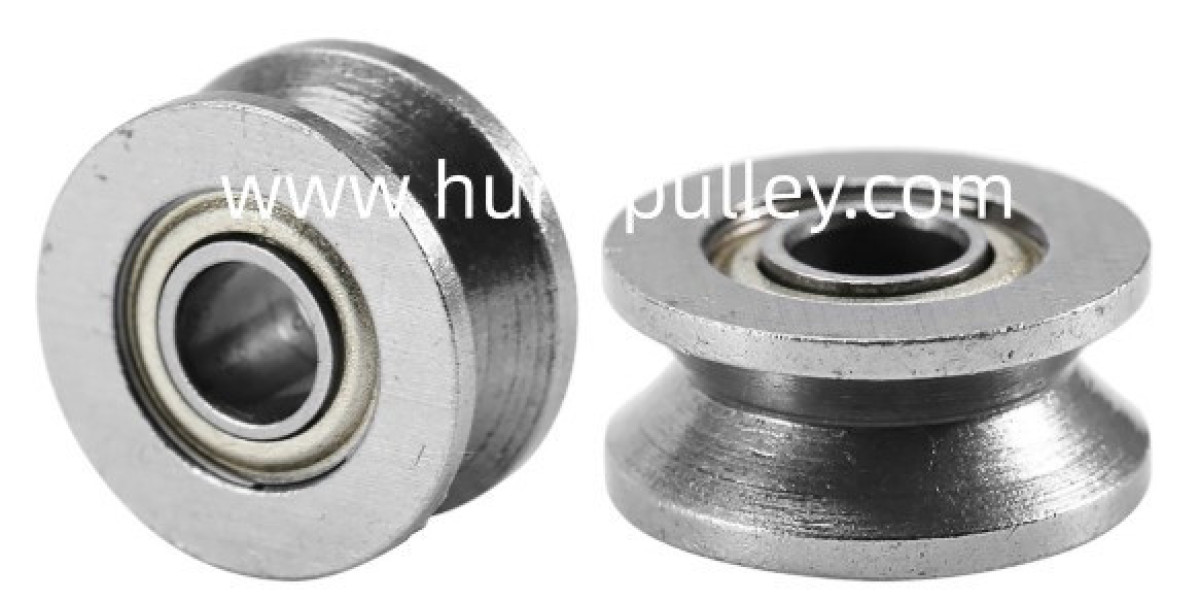

Hune Low Noise Ball Bearing plays a quiet yet critical role inside sliding systems, furniture tracks, small machinery, and automated structures. When rotation becomes rough or irregular, sound is often the first signal that something inside the mechanism is no longer aligned. Understanding where that sound originates allows buyers, distributors, and equipment designers to choose components that maintain smoother movement and reduce daily disturbance.
Noise inside a bearing rarely appears without reason. It is usually the result of small structural inconsistencies that gradually influence motion. These influences may seem minor at first, yet over time they affect user experience and product perception.
Where does the sound begin
Surface roughness is one common source. When raceways lack uniform finishing, rolling elements encounter micro resistance during circulation. That resistance transforms into vibration, and vibration becomes audible tone. Even slight unevenness can echo through surrounding frames.
Another cause lies in dimensional deviation. If internal clearance is not properly controlled, rolling elements may shift rather than glide. This shift creates impact points during rotation. Repeated impact produces rhythmic sound that becomes noticeable in quiet indoor environments.
Lubrication condition also shapes acoustic behavior. Inadequate or uneven distribution increases friction. Excess application can attract dust particles, creating additional interference. Balanced lubrication ensures fluid motion rather than scattered contact.
Contamination should not be ignored. During assembly, tiny particles may enter internal channels. Once trapped, they interrupt circulation and create scratching noise. Clean production space and careful packaging help prevent this issue before installation.
Improper installation contributes as well. When shafts are misaligned or housings are distorted, internal geometry changes subtly. That alteration increases stress concentration and alters rotation path. The result is not only sound, but also accelerated wear.
How can structural refinement reduce disturbance
A well engineered solution focuses on harmony between every element. Groove precision supports stable rolling direction. Controlled clearance prevents collision between components. Refined finishing reduces friction at contact points.
Material coordination matters. High purity steel, stable cage design, and balanced heat treatment influence performance consistency. Each material characteristic interacts with rotational speed and environmental condition.
Assembly discipline determines final outcome. Careful alignment during insertion avoids distortion. Measured pressure application prevents deformation. Inspection routines detect irregular vibration before products reach customers.
When these details are managed carefully, acoustic output decreases significantly. Rotation becomes smooth rather than abrupt. Movement feels controlled instead of hesitant.
Application scenarios require different considerations
For interior sliding doors, comfort is essential. Users expect quiet transition between spaces. A bearing integrated into a roller must support weight without creating echo in hallways.
Furniture tracks demand similar attention. Wardrobes, drawers, and partitions operate frequently. Soft movement enhances perceived quality.
Light industrial systems focus on stability during repetitive cycles. Consistent rotation reduces maintenance intervals and preserves structural balance.
Low Noise Ball Bearing offers a structural approach to these challenges. Instead of treating sound as a secondary issue, it integrates acoustic awareness into design stage. Through balanced geometry and controlled assembly, internal circulation becomes steadier. The result is reduced vibration transmission to outer housing.
Hunepulley applies measured inspection and careful fabrication methods to maintain structural alignment. Attention to groove shaping, rolling element positioning, and protective finishing contributes to quieter motion across diverse applications.
Selecting a suitable component involves more than checking dimensions. Buyers should consider environment humidity, expected load, installation method, and movement frequency. Discussing these factors with a manufacturing partner helps match structure with real usage condition.
Testing samples in realistic scenarios offers valuable insight. Observe startup rotation, sustained movement, and stopping transition. Listen for irregular tone or sudden friction. Smooth acoustic behavior usually reflects balanced internal configuration.
Packaging also influences quality preservation. Protective sealing prevents contamination during transport. Clear labeling ensures correct handling before assembly.
Stable rotation supports brand reputation. When end users experience quiet movement, they associate the entire system with thoughtful engineering. Reducing sound therefore enhances not only comfort but also perceived reliability.
If you are reviewing bearing options for sliding systems or mechanical assemblies, you may examine product details and manufacturing perspective through Hunepulley to gain clearer understanding of structural approach and application focus.