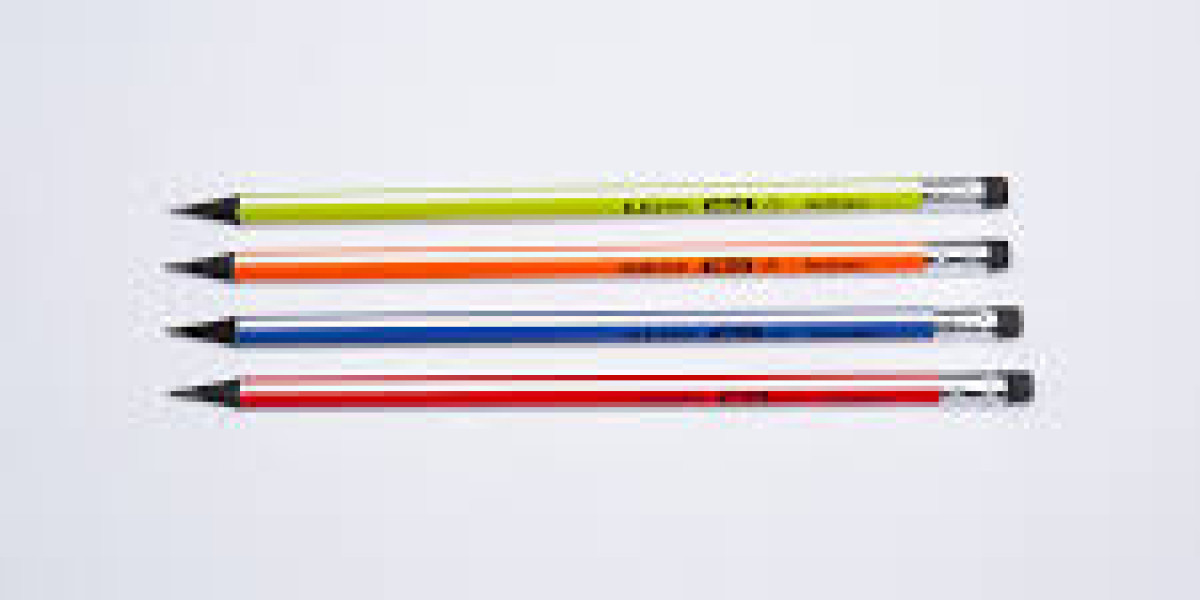

For decades, artists and students have picked up drawing instruments without questioning the single most important component: the colored drawing core inside. Many assume that every pencil core shares a similar nature, yet this assumption collapses under microscopic examination. When you hold a common graphite pencil, you hold compressed carbon mixed with clay. When you pick a Color Pencil Lead, however, you enter a completely different chemical universe. This distinction raises a fundamental question that every stationery user should ask: Why does atjstationery insist on treating these two materials as entirely separate crafts?
Graphite cores rely on a crystalline form of carbon that slides onto paper fibers, leaving metallic-gray marks that reflect light. Manufacturers control hardness by adjusting the clay-to-graphite ratio, producing everything from 9H to 9B grades. These cores feel slick, erase cleanly, and serve technical drawing or writing with unmatched consistency. The production process involves massive grinding machines that pulverize natural graphite into fine powder, then mix it with specific binders before extrusion into thin rods. Global pencil factories produce billions of such cores annually, following formulas refined over two centuries.
Switch your attention to a colored core, and the entire manufacturing philosophy changes direction. No graphite exists inside a genuine colored drawing core. Instead, pigment particles—such as titanium dioxide for white, phthalocyanine blue, or synthetic iron oxides—become the star ingredient. These pigments offer zero natural lubrication, so manufacturers add waxes or oil-based binders to help the color transfer onto paper. Unlike graphite's simple mechanical deposition, colored cores deposit microscopic pigment granules that nestle into paper valleys, creating matte or slightly waxy strokes. The binder proportion determines hardness: too much wax creates smudging, while too little binder causes crumbling during sharpening.
Why does this chemical difference matter for your daily work? Graphite cores cannot produce chromatic hues because carbon absorbs rather than reflects selective wavelengths. You cannot sketch a red apple or a blue sky using any graphite pencil, regardless of pressure variation. Conversely, a colored core can never achieve graphite's silvery darkness or its erasable precision. Each material serves a distinct visual language. Attempting to substitute one for the other results in artistic frustration. Many beginners waste hours trying to layer colored cores into dark shadows, not realizing that graphite remains the superior choice for value studies.
The binding agents create another practical divergence. Water-soluble colored cores contain glycol or polyethylene glycol additives that dissolve upon wet brush contact, transforming the stroke into liquid paint. This feature finds no equivalent in any graphite product. Oil-based colored cores, popular among professional illustrators, resist breaking under heavy pressure and blend without leaving waxy bloom. Wax-based variants offer smooth initial layering but may develop a cloudy film over time. Graphite cores never face such trade-offs because their simple carbon-clay matrix behaves predictably under any humidity or temperature.
From a production standpoint, these two product lines demand separate factory setups. Graphite extrusion requires diamond-tipped dies to withstand abrasive carbon particles. Colored core manufacturing needs high-shear mixers that evenly disperse pigment agglomerates without creating air pockets. A facility that excels at graphite pencils cannot automatically produce colored cores without extensive retooling. This explains why genuine full-line stationery manufacturers remain rare. A company must master two distinct chemical engineering domains simultaneously.
When you hold a pencil described as “colored lead” from an unknown brand, question its true composition. Some low-cost manufacturers add minimal pigment to a graphite base, producing dull, grayish colors that neither blend nor cover well. Authentic Color Pencil Lead contains zero graphite by design, ensuring vibrant, opaque strokes from first application. Testing a core's authenticity requires only a white paper sheet: genuine colored cores leave pure hue marks, while graphite-tainted cores reveal subtle gray undertones under bright light.
For those seeking reliable drawing tools, understanding material science transforms purchasing decisions. A single wrong choice—selecting a graphite-heavy “color” pencil—can ruin an entire illustration with muddy tones and poor lightfastness. Professional artists examine technical specifications before buying, looking for explicit “graphite-free” declarations and binder type indications. The stationery industry's future belongs to manufacturers who educate users rather than obscure these essential differences.
Now consider your own pencil case contents. How many cores inside claim to offer color yet secretly rely on carbon shortcuts? The next time you shop for drawing supplies, visit https://www.atjstationery.com/product/ where every colored core specification appears without hidden graphite mixtures. Aitejia's production facility separates colored and graphite lines completely, maintaining pigment purity across thirty product families. Your artistic potential deserves cores designed from first principles, not compromised mixtures. So ask yourself before your next purchase: does your current drawing tool truly understand chemistry, or is it just pretending?