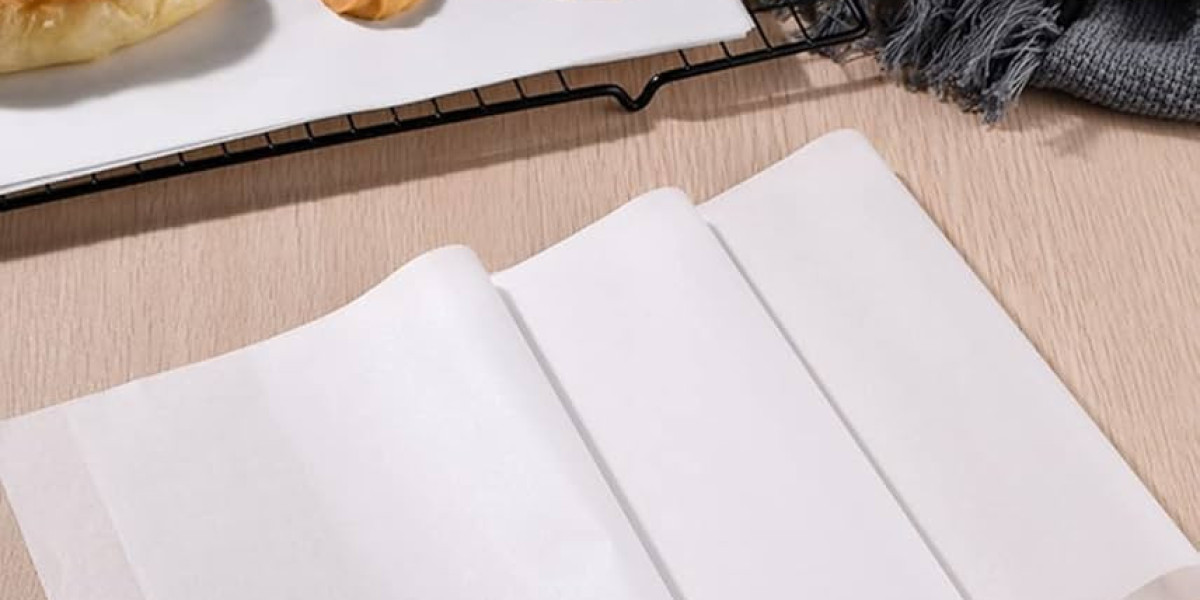

In today’s evolving culinary landscape, the importance of Parchment Paper in baking processes continues to grow, serving as a reliable medium that balances heat resistance, structural stability, and food safety across a wide range of cooking environments.
The performance of parchment paper is rooted in its carefully engineered fiber composition. Typically derived from refined wood pulp, the base material undergoes a series of treatments that transform it into a dense, smooth, and durable sheet. One of the most critical processes is acid or enzymatic treatment, which modifies the cellulose structure to create a compact surface with enhanced resistance to moisture and grease. This transformation allows the paper to maintain its integrity even when exposed to high temperatures or oily food products.
Another defining characteristic is its non-stick behavior, which is often achieved through advanced surface treatment rather than relying solely on coatings. In many cases, silicone is applied in a controlled layer to enhance release properties while ensuring food safety compliance. The uniformity of this application is essential; inconsistencies can lead to uneven baking results or localized sticking. Through precision coating technologies, manufacturers ensure that each sheet delivers consistent performance across its entire surface.
Heat resistance is equally vital in determining the reliability of parchment paper. During baking, the material must withstand prolonged exposure to elevated temperatures without curling, burning, or degrading. This is achieved through a combination of fiber densification and controlled drying processes, which stabilize the paper structure. As a result, parchment paper can be used in ovens for extended periods, supporting a variety of baking techniques from slow roasting to high-temperature pastry production.
The manufacturing process also involves careful control of thickness and flexibility. After the initial sheet formation, the paper passes through calendaring systems that compress and smooth the fibers. This step not only enhances mechanical strength but also improves the paper’s ability to conform to different baking surfaces. Whether lining a flat tray or fitting into a deep mold, the flexibility of the material ensures even contact and heat distribution.
From a practical standpoint, understanding how to use parchment paper effectively can significantly influence baking outcomes. For instance, shaping the paper to match the contours of baking pans reduces air gaps and promotes uniform cooking. In delicate baking applications, such as meringues or thin pastries, placing the paper on a stable surface before adding ingredients helps maintain precise shapes during transfer to the oven.
In addition to traditional baking, parchment paper is widely used in alternative cooking methods. It can serve as a protective layer during roasting, preventing direct contact between food and metal surfaces. This reduces the risk of over-browning and simplifies cleanup. It is also commonly used in steaming techniques, where food is wrapped within the paper to retain moisture and flavor without requiring additional fats or oils.
The versatility of parchment paper extends into food preparation and storage. It can be used to separate layers of dough or other ingredients, preventing sticking during refrigeration or freezing. This makes it particularly useful in both commercial kitchens and home settings where efficiency and organization are priorities.
Companies involved in global supply chains, such as Zhejiang Guanghe New Materials Co., Ltd.contribute to the availability of consistent parchment paper products by connecting manufacturing capabilities with international markets. Through quality-focused sourcing and distribution, they help ensure that users receive materials that meet both functional and safety expectations.
As the demand for reliable baking materials continues to increase, ongoing improvements in processing technology and material science are shaping the future of parchment paper. These developments aim to enhance performance while aligning with environmental considerations and evolving industry standards.For more information about parchment paper products and supply options, please visit https://www.guanghepaper.com/product .